HOT AISLE FAQs:
In response to a number of questions we have been receiving from Data Center Managers and Heads, we are pleased to introduce ‘HOT AISLE FAQs’, an interactive section where our readers can send in any questions they have with respect to IT Infrastructure Management & Monitoring. These will be answered in subsequent issues of HOT AISLE.
Q1. What is PUE ? How is it calculated?
The Power Usage Effectiveness (PUE) metric which was first introduced by The Green Grid™ in 2007 has become the de facto standard for measuring data center efficiency. But despite its prevalence, many data center operators are unclear on what PUE is, how it is calculated, and how it can be used to further energy efficiency initiatives. For instance, many data center managers know that their PUE readings should be as close to the number one as possible, but why?
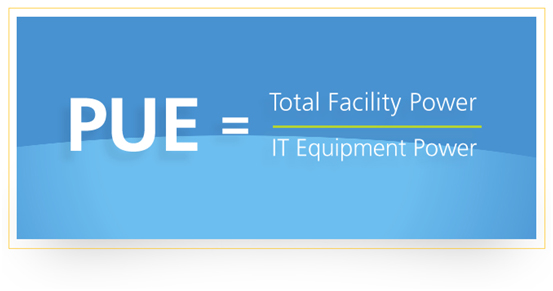
PUE is a ratio of the amount of power needed to operate and cool the data center vs. the amount of power drawn by the IT equipment in the data center. The equation looks like this:
PUE = (Total Facility Energy) / (IT Equipment Energy)
“Thus having a PUE of one would mean that you have a perfect data center where all the power coming into the building makes it to the IT equipment with none used for cooling systems or lighting, or lost in transmission to the IT equipment. “
So now that you understand the equation, you may be wondering how you can collect data for both facility and IT equipment. For facility, most rely on a utility meter. However, installing what is called a “shadow meter” allows data center operators to track total facility power utilization on a daily basis instead of waiting on the monthly utility bill.
For IT equipment, it is best to collect power data from your rack power distribution units (PDUs) as they can often meter down to the individual outlet level providing insights into the efficiency of individual equipment. Other times you may be able to collect this information from remote power panels (RPPs) or uninterruptible power supplies (UPS). And in the event that neither provides metering capabilities, you may consider adding an aftermarket branch circuit meter with split-core current transformers that snaps into existing panels.
The data you collect can be manually added to a worksheet at predetermined intervals and you can set up functions or macros to perform your calculations for you. Or you can use intelligent rack PDUs that send data over the network to a database that is connected to a DCIM power monitoring solution that will automatically calculate PUE, reveal trends over time, and help data center managers to evaluate how well efficiency initiatives are performing.